Chronic Pain
What is chronic pain?
As the IASP (International Association for the Study of Pain) puts it, “pain is an unpleasant sensory and emotional experience associated with, or resembling that associated with, actual or potential tissue damage.”
- The word sensory conveys that pain can be characterised through its physiological features.
- The word emotional highlights how unpleasant and subjective the experience is.
Initially, pain serves as a warning signal. Once an acute pain lasts longer than three months, it shifts into a chronic form. From then on, the sensation no longer works as a warning: rather than a symptom, it turns into a condition of its own.
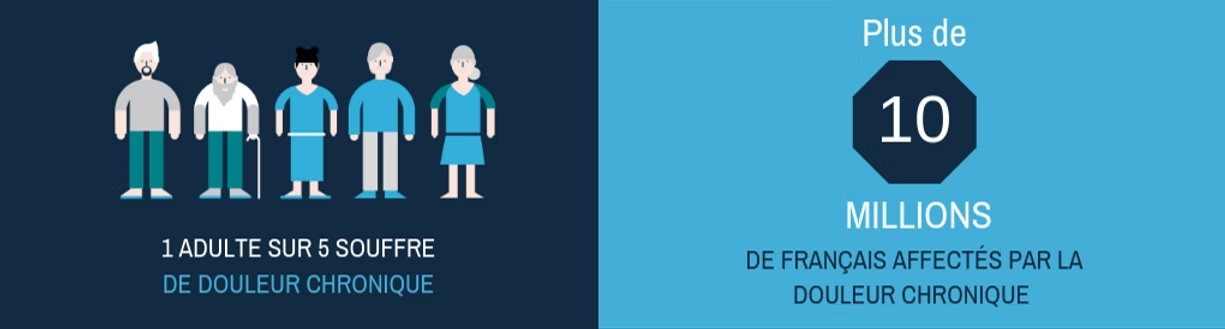
Characteristics of chronic pain
1) Persistence over time
What sets chronic pain apart first of all is how long it lasts. It carries on well past the usual healing period, typically beyond three to six months. Such persistence signals an alteration in the mechanisms that regulate pain, one that lingers even after the original lesion has healed.
2) Independence from the initial stimulus
As months pass, pain may break away from whatever first triggered it. It is still felt even when no active tissue damage or inflammation remains. The explanation lies in changes within the nervous system, which keeps the pain signal going on its own.
3) Emotional modulation
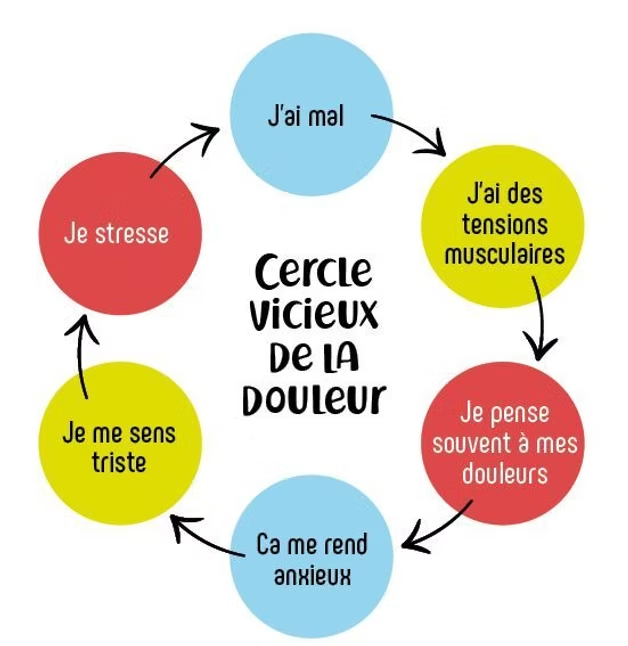
Emotional factors weigh heavily on chronic pain. Feelings of stress, anxiety or depression tend to heighten what is felt, whereas favourable psychological states may help ease it, a clear illustration of the tight bond between the brain and the way pain is perceived.
4) Central sensitisation
Step by step, the central nervous system grows more reactive. The term central sensitisation describes the situation in which ordinarily harmless stimuli come to feel painful, or in which pain is amplified out of proportion. This process is central to a great many persistent pain conditions.
5) Functional impairment
The effect on quality of life is immediate. Chronic pain can cut physical capacity, narrow everyday activities and take a toll on sleep, work and social life. This loss of function frequently helps sustain the vicious cycle of pain.
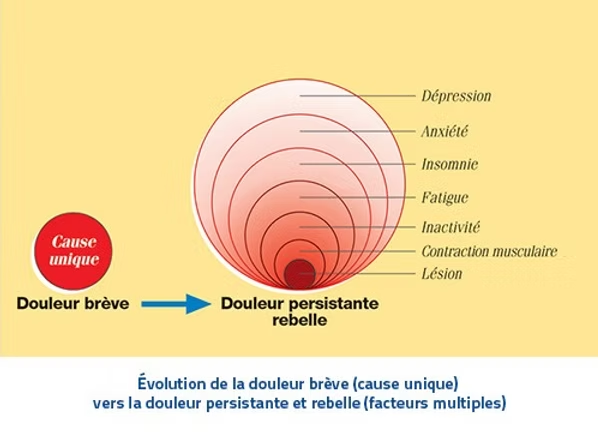
How does pain become chronic?
1) Biological factors
Nerve or neuropathic damage: an injury to the nervous system, as seen in neuropathic pain (for instance diabetic neuropathy or post-herpetic neuralgia), can set up long-lasting pain.
2) Prolonged inflammation
Long-term inflammatory disorders, such as arthritis or fibromyalgia, keep pain going by continuously firing the nociceptors (the pain receptors).
3) Neuronal plasticity
Durable shifts in how neuronal circuits handle pain, such as overexcitable spinal cord neurons or the loss of natural inhibitory controls, can hold pain in place.
4) Psychological factors
- Stress and anxiety: sustained stress or anxiety rank among the leading drivers of the shift towards chronic pain.
- Depression: often tied to chronic pain, it acts both as a result of it and as something that makes it worse.
- Catastrophising: overstating the harmful outcomes of pain can strengthen the sensitisation pathways.
5) Social factors
Social isolation: having little support from others can worsen chronic pain.
6) Economic factors
Job loss or money worries can set off a vicious cycle.
7) Behavioural factors
A lack of physical activity and reliance on self-medication can keep pain going.
Neurophysiological mechanisms of chronification
The transition from acute to persistent pain rests on precise changes within the nervous system. These changes were described in detail by Clifford Woolf from the 1980s onwards, then integrated into the neuromatrix model proposed by Ronald Melzack. Three phenomena most often combine in a patient with chronic pain.
Peripheral and central sensitisation
Following an injury, nociceptors lower their firing threshold. A normally harmless pressure is then perceived as painful: this is allodynia. At the spinal level, the neurons of the dorsal horn amplify their response through a mechanism known as wind-up, dependent on NMDA receptors. This process of central sensitisation was formalised by Woolf in 2011 in the journal Pain.
Loss of descending inhibition
The brain has circuits that actively dampen pain: serotonergic and noradrenergic pathways arising from the brainstem, and diffuse noxious inhibitory controls (DNIC). In a patient with chronic pain, these mechanisms work less well. A stimulus that would trigger a moderate response in a healthy subject then produces an amplified and prolonged response.
Cortical neuroplasticity
Functional imaging has shown that chronic pain reshapes the somatosensory cortex. In patients with chronic low back pain lasting more than a year, the work of Herta Flor has demonstrated a reorganisation of the cortical representation of the painful area. This observation sheds light on a frequent clinical paradox: pain can persist even when tissue imaging no longer shows a lesion. The good news is that this plasticity remains, in part, reversible under the combined effect of movement and education.
The biopsychosocial model, beyond the strictly mechanical
Since 2020, the International Association for the Study of Pain has integrated the biopsychosocial model into its official definition of pain. This framework rests on a simple observation: the same tissue lesion can give rise to very different experiences depending on the patient. Three dimensions interact continuously.
- Biological: lesion, inflammation, sensitisation, comorbidities, sleep quality.
- Psychological: anxiety, catastrophising, beliefs about pain, kinesiophobia (fear of movement).
- Social: support from those around, working environment, economic status, access to care.
A now-classic study by Felitti and Anda, published in 1998 in the American Journal of Preventive Medicine, highlighted the statistical link between difficult childhood experiences (abuse, neglect, parental separation) and the prevalence of chronic pain in adulthood. Several European cohorts have since confirmed this result.
The practical consequence is direct. Purely mechanical management is less likely to work if the psychosocial factors are not identified. Conversely, ignoring the biological dimension leads to underestimating certain diagnoses. Osteopathy fits within this framework rather than replacing it.
Can osteopathy relieve chronic pain?
Within a multimodal strategy that pairs suitable exercise with therapeutic education, manual approaches can play a part in managing some chronic pain conditions, the evidence being strongest for non-specific chronic low back pain. Charbel Kortbawi, osteopath in Beirut, who holds a University Diploma in Chronic Pain Management (Sorbonne) and belongs to the SFETD and the IASP, sees patients at the Active Health Clinic for individually tailored chronic pain care.
Studies indicate that manual therapy might assist in modulating pain, chiefly via segmental spinal mechanisms and perhaps through an effect on peripheral inflammatory responses, while further mechanisms still need clarifying. Such work belongs to a whole-person approach that factors in central sensitisation.
Movement and exercise: a cornerstone of management
Keeping up a suitable level of physical activity now counts among the most valuable tools against chronic pain. Instead of extended rest, easing gradually back into movement helps protect function and quality of life. The very purpose of osteopathic care and therapeutic education is to help each person rebuild trust in their moving body. Alongside the consultation, tailored exercises may be suggested.
Pain neuroscience education
Understanding how pain works reduces the fear it inspires. This reduction in fear is often accompanied by a measurable drop in pain intensity. The principle, formalised by David Butler and Lorimer Moseley under the name Explain Pain, is today supported by several meta-analyses.
A systematic review led by Adriaan Louw and published in 2016 in Physiotherapy Theory and Practice examined 15 controlled trials involving patients with chronic musculoskeletal pain. The effects are moderate but reproducible: reduced pain, improved function, less catastrophising, and better adherence to exercise.
In practical terms, pain education consists of explaining:
- The difference between nociception (the electrical signal) and pain (the brain's interpretation).
- The fact that intense pain does not necessarily imply a severe lesion.
- The mechanisms of central sensitisation and their partial reversibility.
- The role of sleep, stress and physical activity in modulating the signal.
This step takes up a significant part of the first consultation. Its aim is not to minimise the pain felt but to reframe it in a way that gives the patient back a hold on their progress. This approach is developed in our article on therapeutic pain education.
What osteopathy does not achieve on its own
No isolated manual therapy makes chronic pain that has been present for several years disappear. For the past decade, international guidelines have converged towards multimodal management, in which osteopathy holds a useful but partial place. The therapist's role is then to align their work with the other known levers, including physiotherapy and therapeutic exercise.
Graded exercise and pacing
Physical activity is now regarded as one of the pillars of chronic pain management. A Cochrane review published in 2017 (Geneen et al.) established this from more than 200 trials. The principle of pacing consists of dosing effort according to the patient's tolerance, increasing gradually rather than trying to push the limits straight away. A target of 15 to 20 minutes of daily walking often makes a realistic starting point.
Cognitive behavioural therapies and ACT
Cognitive behavioural therapy (CBT) and acceptance and commitment therapy (ACT) have proven their effectiveness on chronic pain, with an effect comparable to that of many long-term drug treatments. Osteopathic care can prepare the ground for these approaches, notably by reducing kinesiophobia through gradual exposure to movement.
Sleep
The relationship between chronic pain and sleep is bidirectional: pain disrupts sleep, and poor sleep lowers the pain threshold from the very next night. Restoring regular sleep hygiene (stable hours, a dark and cool bedroom, less screen time in the evening) is among the most rewarding interventions relative to the effort asked of the patient. Our detailed advice is gathered in our article on sleep and chronic pain.
The main syndromes treated
Low back pain
Chronic lumbago
Learn moreFibromyalgia
Diffuse chronic pain
Learn moreHeadaches and migraines
Chronic tension headaches
Learn moreChronic pelvic pain
Pelvis and endometriosis
Learn moreJaw pain
TMJ disorders, bruxism
Learn moreMyofascial syndrome
Trigger points, deep tension
Learn moreJoint hypermobility
Pain and joint instability
Learn moreCharbel J. Kortbawi, osteopath specialising in chronic pain in Beirut
Pain chronification is a multifactorial process combining biological, psychological and social dimensions. Mr Charbel Kortbawi holds the following qualifications:
- University Diploma “Chronic Pain Management” (Université Paris-Sorbonne)
- University Diploma “Pain and Human Motor Function” (Université Polytechnique Hauts-de-France)
- Master 2 in Neurosciences
Frequently Asked Questions (FAQ)
What is chronic pain and how can an osteopath in Beirut help?
Pain is called chronic when it lasts more than 3 months, frequently without any active lesion. Central sensitisation mechanisms are involved. By working on the mechanical elements (muscular tension, joint restrictions), osteopathy dampens nociceptive signals and improves daily life.
How many sessions are needed to see an improvement with an osteopath in Beirut?
With chronic pain, the first gains usually show after 3 to 4 sessions. A full protocol often runs to 6 to 10 sessions across 3 to 6 months, according to how complex and long-standing the pain is. Its effect is greatest when paired with a tailored exercise programme.
Which chronic pain conditions are most commonly treated by an osteopath in Beirut?
The problems handled most often include fibromyalgia, myofascial syndrome, chronic headaches, chronic low back pain together with chronic jaw pain (TMJ). Every patient is offered a tailored approach.
How long does it take to feel an improvement?
The first changes, less morning stiffness, more continuous sleep, increased tolerance to effort, most often appear after 2 to 4 sessions. A significant and stable improvement in pain generally requires 3 to 6 months of follow-up, with spaced-out sessions and active work between appointments. In patients whose pain dates back more than 5 years, the trajectory can be longer.
Can osteopathy treat fibromyalgia?
Osteopathy does not cure fibromyalgia, whose central mechanisms are not altered by manual treatment. It does, however, help reduce the areas of muscular hypertonia and the joint restrictions that worsen daily life. Combined with a tailored exercise programme, sleep management and sometimes psychological support, it is one of the tools within a broader strategy. A page dedicated to fibromyalgia details this approach.
Do I need to stop painkillers to see an osteopath?
No. The decision to change a drug treatment lies strictly with the prescribing doctor. An osteopathy session is not a substitute for a painkiller and does not conflict with most pain treatments. It is useful, however, to mention during the consultation the medicines being taken, including those taken "as needed": this information helps interpret the response to manual treatment in the days that follow.
Scientific references
- Qaseem A, et al. Noninvasive Treatments for Acute, Subacute, and Chronic Low Back Pain: A Clinical Practice Guideline From the American College of Physicians. Ann Intern Med. 2017;166(7):514-530. doi.org/10.7326/M16-2367
- Geneen LJ, et al. Physical activity and exercise for chronic pain in adults: an overview of Cochrane Reviews. Cochrane Database Syst Rev. 2017;4(4):CD011279. doi.org/10.1002/14651858.CD011279.pub3
- Franke H, Franke JD, Fryer G. Osteopathic manipulative treatment for nonspecific low back pain: a systematic review and meta-analysis. BMC Musculoskelet Disord. 2014;15:286. doi.org/10.1186/1471-2474-15-286
- Gevers-Montoro C, et al. Neurophysiological mechanisms of chiropractic spinal manipulation for spine pain. Eur J Pain. 2021;25(7):1429-1448. doi.org/10.1002/ejp.1773
- Woolf CJ. Central sensitization: implications for the diagnosis and treatment of pain. Pain. 2011;152(3 Suppl):S2-S15. doi.org/10.1016/j.pain.2010.09.030
- Melzack R. Pain and the Neuromatrix in the Brain. J Dent Educ. 2001;65(12):1378-1382. doi.org/10.1002/j.0022-0337.2001.65.12.tb03497.x
- Louw A, Zimney K, Puentedura EJ, Diener I. The efficacy of pain neuroscience education on musculoskeletal pain: A systematic review of the literature. Physiother Theory Pract. 2016;32(5):332-355. doi.org/10.1080/09593985.2016.1194646
- Felitti VJ, Anda RF, et al. Relationship of childhood abuse and household dysfunction to many of the leading causes of death in adults: The Adverse Childhood Experiences (ACE) Study. Am J Prev Med. 1998;14(4):245-258. doi.org/10.1016/S0749-3797(98)00017-8